









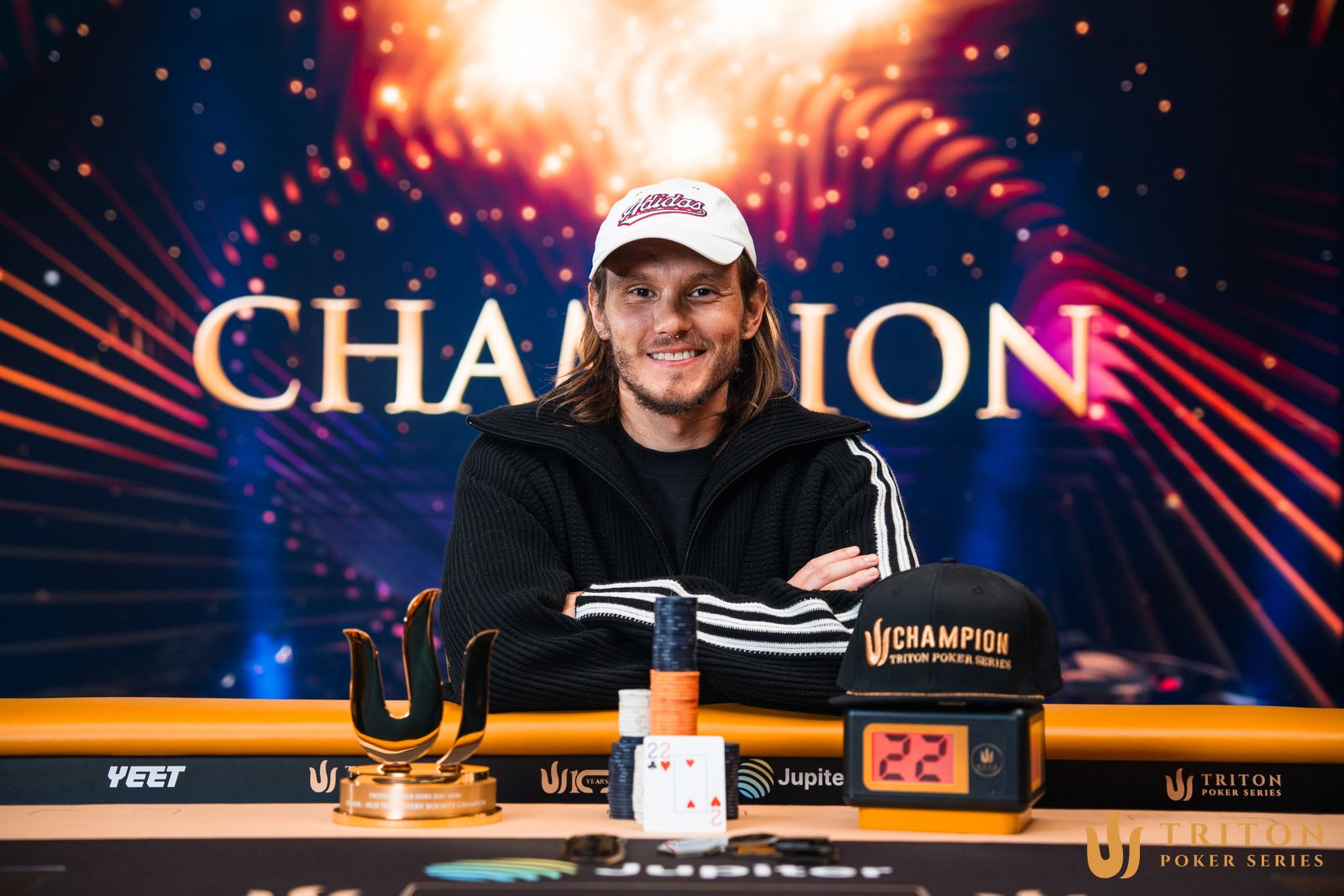
Champion Alisson Piekazewicz
A dream two days on the Triton Poker Super High Roller Series earned Brazilian pro Alisson Piekazewicz a maiden title on the tour, giving him the famous trophy and a confirmed prize of $1,909,000.
Of that, $709,000 came from the main prize pool, and he added a further $1.2 million when he hit the jackpot at the Mystery Bounty pulling ceremony as well.
Yes, this was the ever-popular $40,000 Mystery Bounty event, where every knockout in the latter stages brings with it an additional cash injection. The exact size of Piekazewicz's prize was only determined the day after the event concluded, when the bounties were pulled.

Alisson Piekazewicz celebrates pulling the top prize at the Mystery Bounty ceremony
Piekazewicz knocked out an incredible 13 opponents on the tournament's final day, while also retaining his own bounty token. That gave him 14 pulls, of a minimum $40,000 each. And among the envelope he opened, Piekazewicz pulled the $400,000 top prize, plus two further $100,000 awards.
It meant the bounties earned him even more than he picked up for winning the tournament.
The bounty tally underlines Piekazewicz's phenomenal performance, where by his own admission he barely lost a single hand (and when he did, he won the chips back immediately). He was also the beneficiary in a spectacular four-way all-in pot, where he sent three opponents to the rail simultaneously.
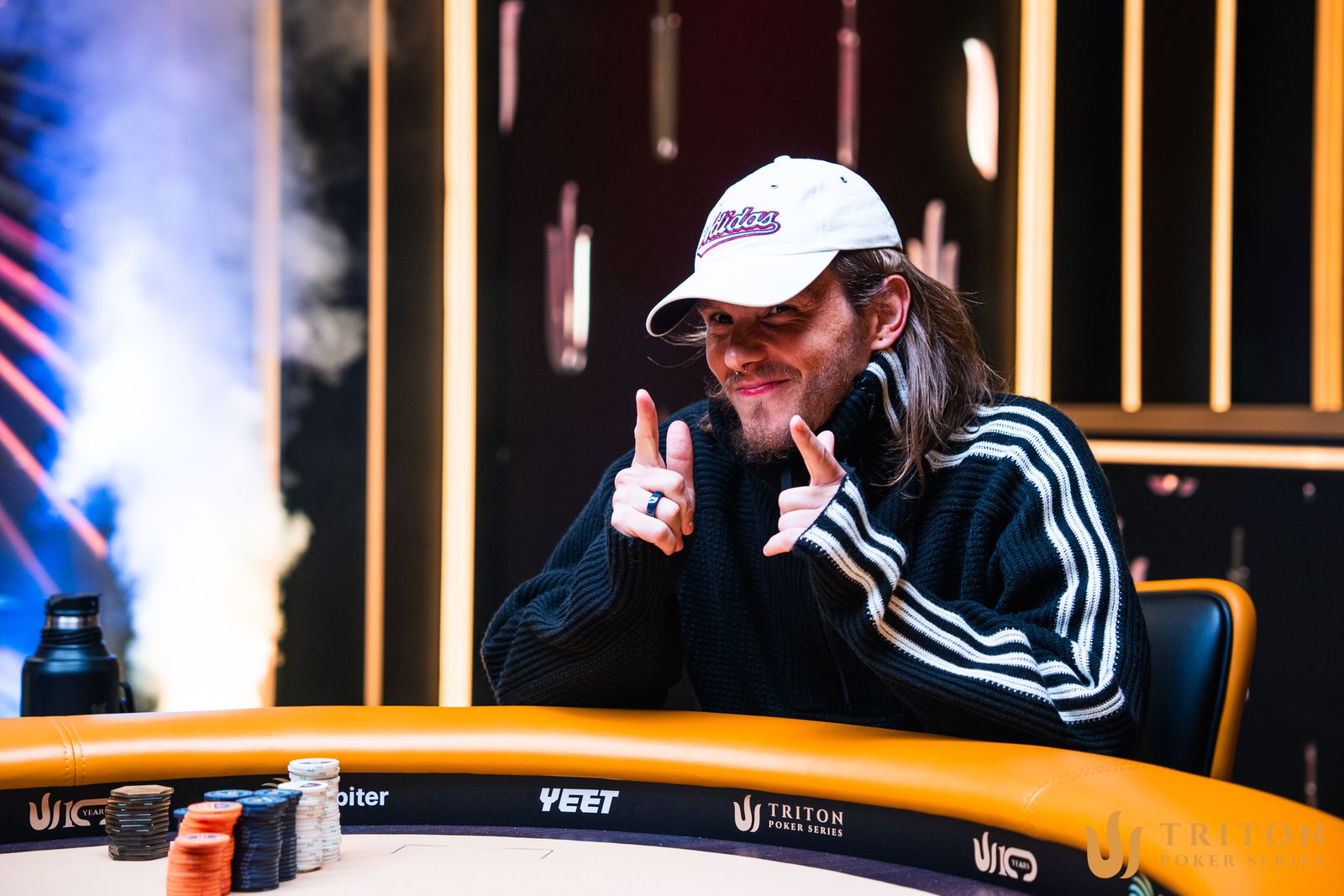
The sharp-shooter Alisson Piekazewicz
The tournament was complete before 9 p.m. local time, when Piekazewicz finished off Seth Davies in second place. Davies was the only player who got anywhere close to Piekazewicz, earning six bounties of his own (which he turned into $380,000 at the bounty pull).
But this was truly the smoothest run to a title the tour has ever seen.
"It was probably the best tournament I ever had," Piekazewicz said, admitting that he could do no wrong. "I've never seen nothing like this before. Even I am surprised."
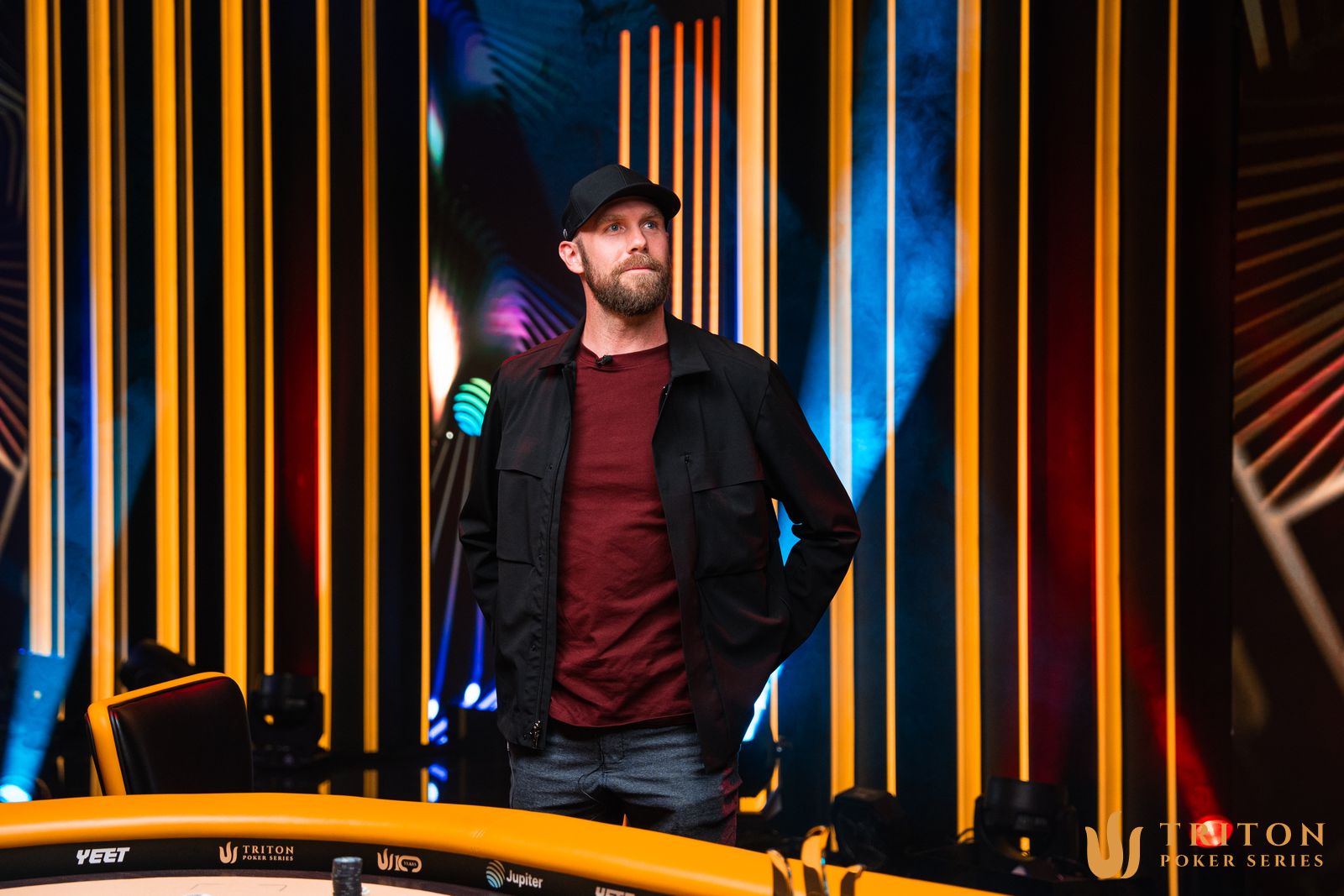
Seth Davies was powerless to halt Piekazewicz
Even by the time the massive four-handed pot came about, Piekazewicz said he had already won four or five huge all-in pots. But it was all part of the game plan, which every player adjusts for the Mystery Bounty event.
"I tried to get as many bounties as I could get," he said.
Job done. And on the following day, he quickly showed just how valuable that strategy can be.
TOURNAMENT ACTION
The Mystery Bounty event is always among the most popular, with the top 25 percent of the field getting a bounty of at least $40,000 on their heads. Each knockout has the potential to be worth way, way more than that, so players have two additional incentives when they sit down to play.
The first is to try to make it into the last quarter of the field. It's only then that the bounty aspect comes into play. The second is then to start gathering those bounty tokens: the bounty can change shove-calling ranges in what might otherwise be a marginal spot.
The tournament can therefore sometimes play out at a different pace to a more traditional event, and in this one the incredible bounty-gathering skills of the Brazilian pro Allison Piekazewicz, ably assisted by Seth Davies, hurried this one along.
Davies was responsible for the conventional bubble bursting. With several stacks of fewer than 10 blinds around the room Davies ended up busting two players who had more than that: Ren Lin and then Tom Fuchs, which took the event into the money. Firstly, Davies open-jammed from the small blind with only Lin still to act. But Lin found AK and called to put his tournament on the line.
Davies only had 95 but hit both of those cards to make two pair and win. Not long afterwards, Davies then had pocket 10s which held eventually against Fuchs' K. "Eventually" because the flop of gave Fuchs a straight and Davies a set. The turn didn't change too much fundamentally. But the river gave Davies a boat and sent Fuchs out.
Tom Fuchs bubbles
From that point, everyone would get a minimum $32,000 from the main prize pool, but those bounties were still hugely attractive.
THE $120,000 TOURNAMENT POT
Just after the field went down to its last two tables, one of those hands played out that has "viral clip" written all over it. The chip-leading Alisson Piekazewicz already had four bounties in front of him, sitting in the cutoff seat, and saw Du Qiao open-jam nine big blinds from under the gun.
Patrik Antonius folded, but then Jun Obara, the bounty king the last time this tournament played out in Jeju, re-jammed for 30 blinds. In what must have been a glorious moment for Piekazewicz, he looked down and saw AA. Not only that, he still had the button, plus both players in the blinds, behind him still to act.
Piekazewicz just called with the aces, likely hoping to see any of those behind him trying to sweep up the bounties. Dominykas Mikolaitis passed up the chance, but Anatoly Zlotnikov fancied getting involved with his nine blinds from the small blind.
Bryn Kenney folded the big blind, but we now had three players all-in and at risk, while the covering stack had aces.
Du had 1010
Obara had Q10
Zlotnikov had QJ
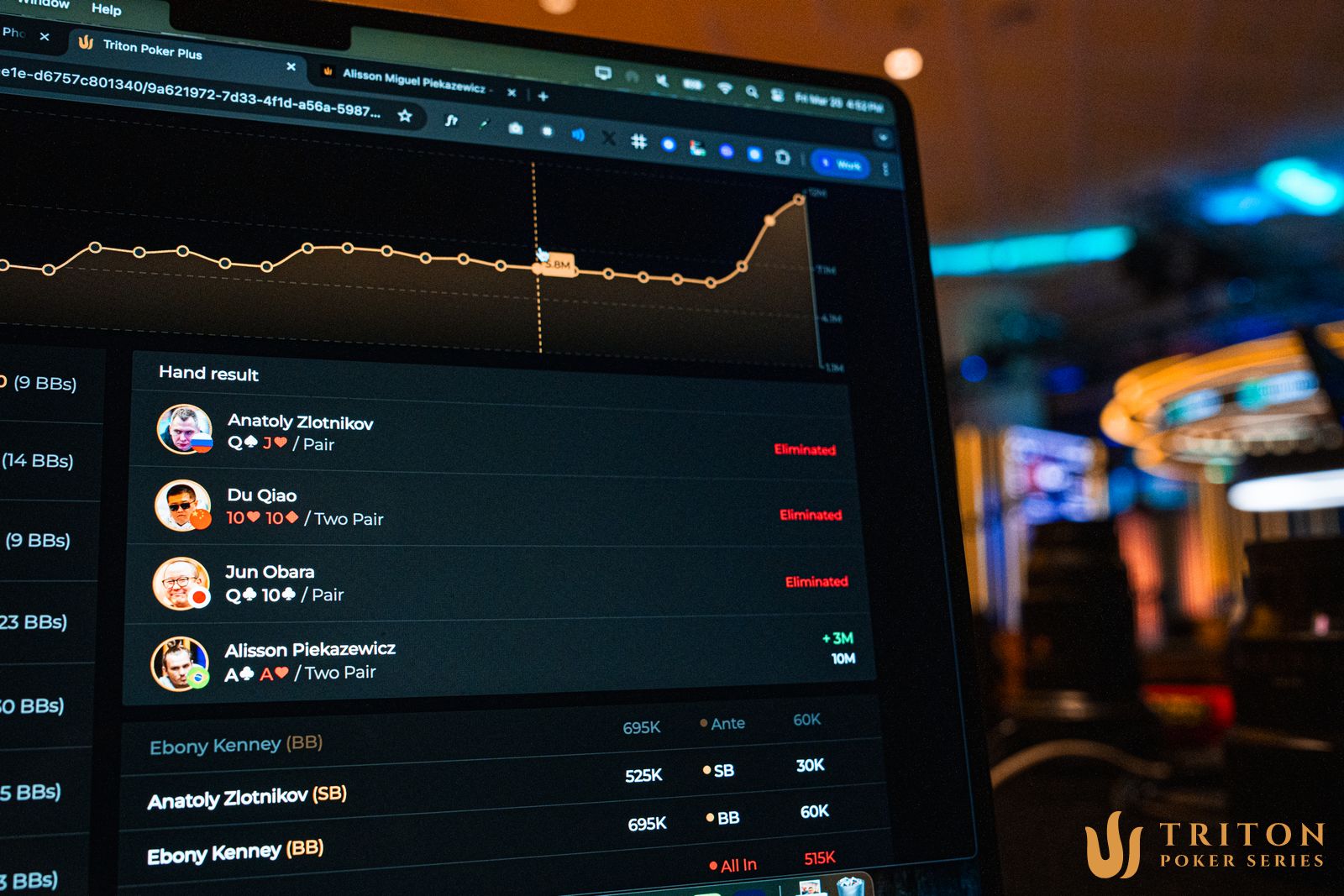
How the Triton Poker Plus app reported the record-breaking pot
The all-in players had each other largely blocked, and the board of 545 was completely clean. Piekazewicz therefore scored a triple knockout -- a Triton Poker Series first -- in the tournament where it's most profitable for him. Each bounty was worth at least $40,000, so this was the $120,000 pot.
(For good measure, Piekazewicz knocked out Antonius with jacks beating AK on the very next hand.)
Piekazewicz had close to 200 big blinds at this point, plus nine bounties, and Seth Davies was the only other player above the average stack. They played on until they reached the eight-handed final table, at which those two were some distance in the lead.
Piekazewicz did have a slight wobble. He doubled up Wang Ye when Wang's 87 rivered a flush to beat Piekazewicz's pocket queens. But on the very next hand, Piekazewicz had queens again, Ye had 10s, and the bigger pair held, so Piekazewicz got his chips back. Wang was out in eighth, and that set the final.
Alisson Piekazewicz - 14,875,000 (186 BBs)
Seth Davies - 6,415,000 (80 BBs)
Sean Winter - 3,570,000 (45 BBs)
Dominykas Mikolaitis - 3,100,000 (39 BBs)
Yahor Dambrouski - 1,745,000 (22 BBs)
Hannes Jeschka - 1,210,000 (15 BBs)
Adrian Mateos - 1,080,000 (14 BBs)
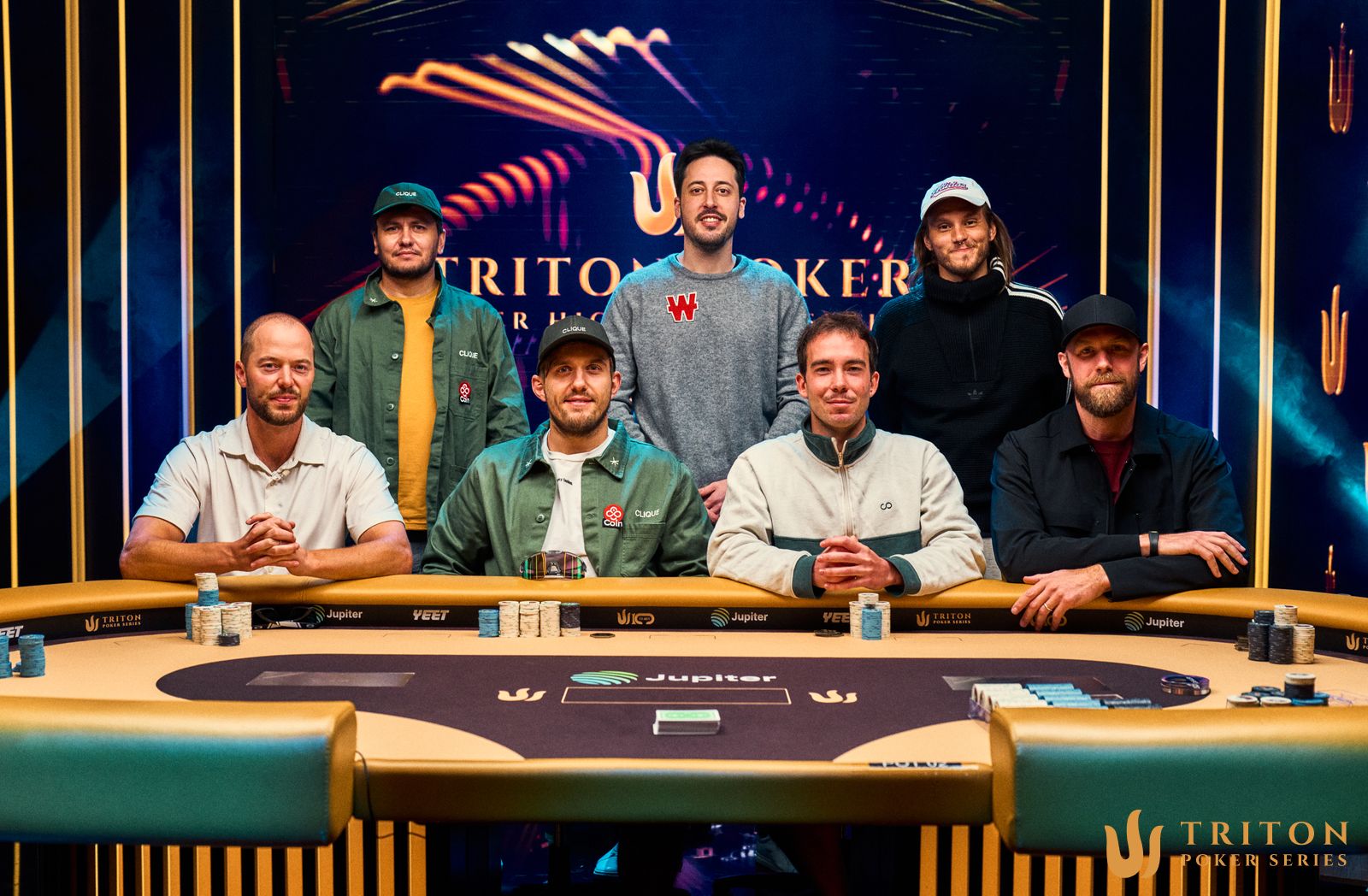
Event 5 final table players (clockwise from back left): Yahor Dambrouski, Adrian Mateos, Alisson Piekazewicz, Seth Davies, Hannes Jeschka, Dominykas Mikolaitis, Sean Winter.
Surprisingly enough, the first major skirmish at the final did not feature either of the two big leaders. Instead, Sean Winter tried to muscle Hannes Jeschka out of a pot played between button and big blind, but Jeschka found a gutsy call for his tournament life and stayed alive.
Winter raised his button with Q5 and Jeschka called from two seats along with K. The flop was and Jeschka checked middle pair. Winter made a continuation bet, which Jeschka called, taking them to the on the turn. It couldn't make any difference, and the pattern of check/bet/call repeated.
The 4 river similarly didn't change much, but after Jeschka checked, Winter put in the polarising jam. Jeschka had to decide whether to commit his last 10 blinds with what was still second pair. He decided it was worth it, and was right.
That proved to be the first significant chip movement of the final, and it was especially relevant as it left Winter with a relative short stack and a desire to double himself. But he couldn't manage it. As it turned out, it was Jeschka who did the damage once more. Winter open-shoved A4 on the button, and Jeschka had A in the big blind to make the call.
The runout was blank and Winter was out. He took $120,000 for seventh. He didn't have any bounties, so that was that.
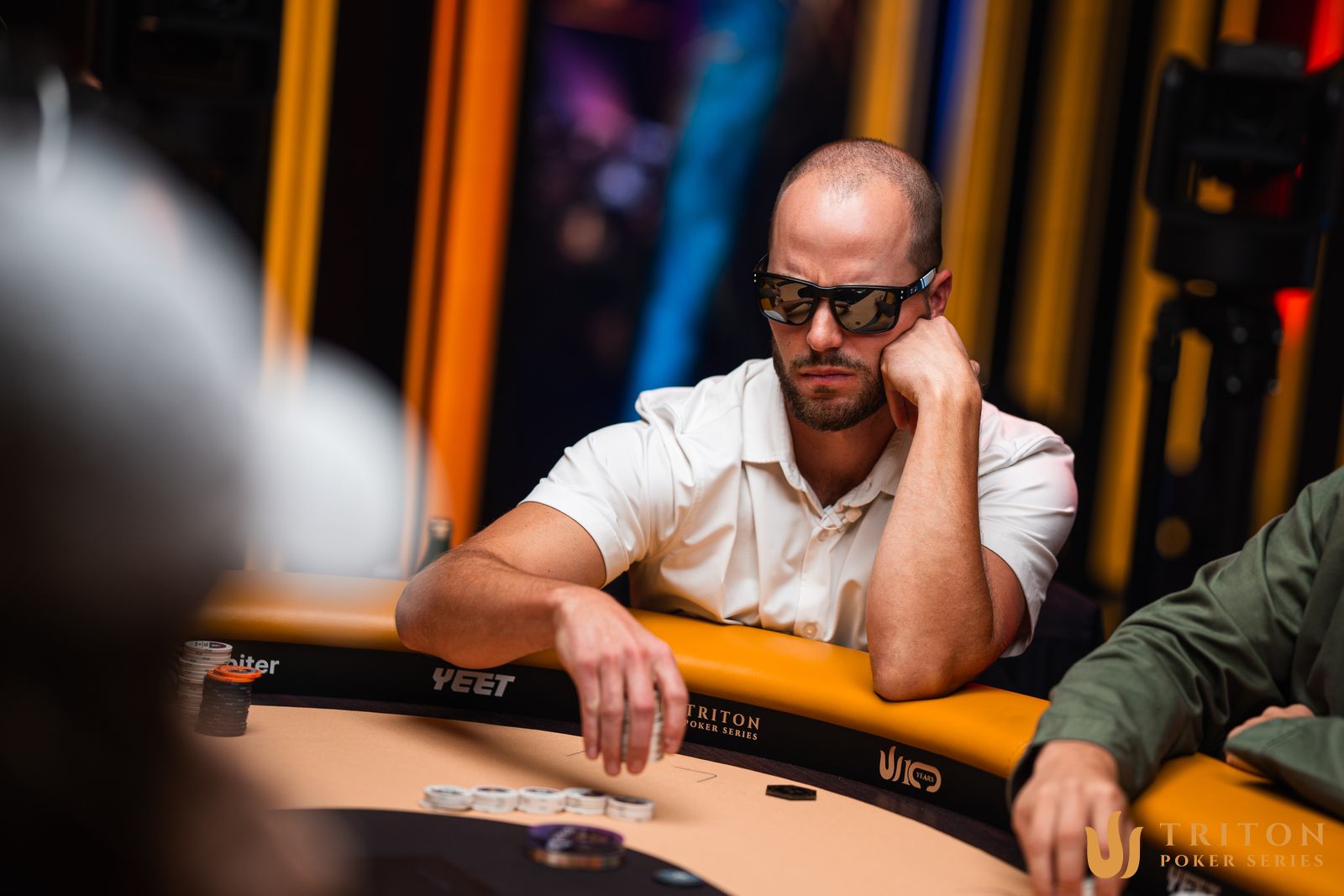
Sean Winter couldn't recover from a failed blu
Adrian Mateos was still the tournament short stack, but he remained at the table as the next opponent headed out. This time is was former champ Dominykas Mikolaitis, who ended up losing a big flip to Davies to perish in sixth.
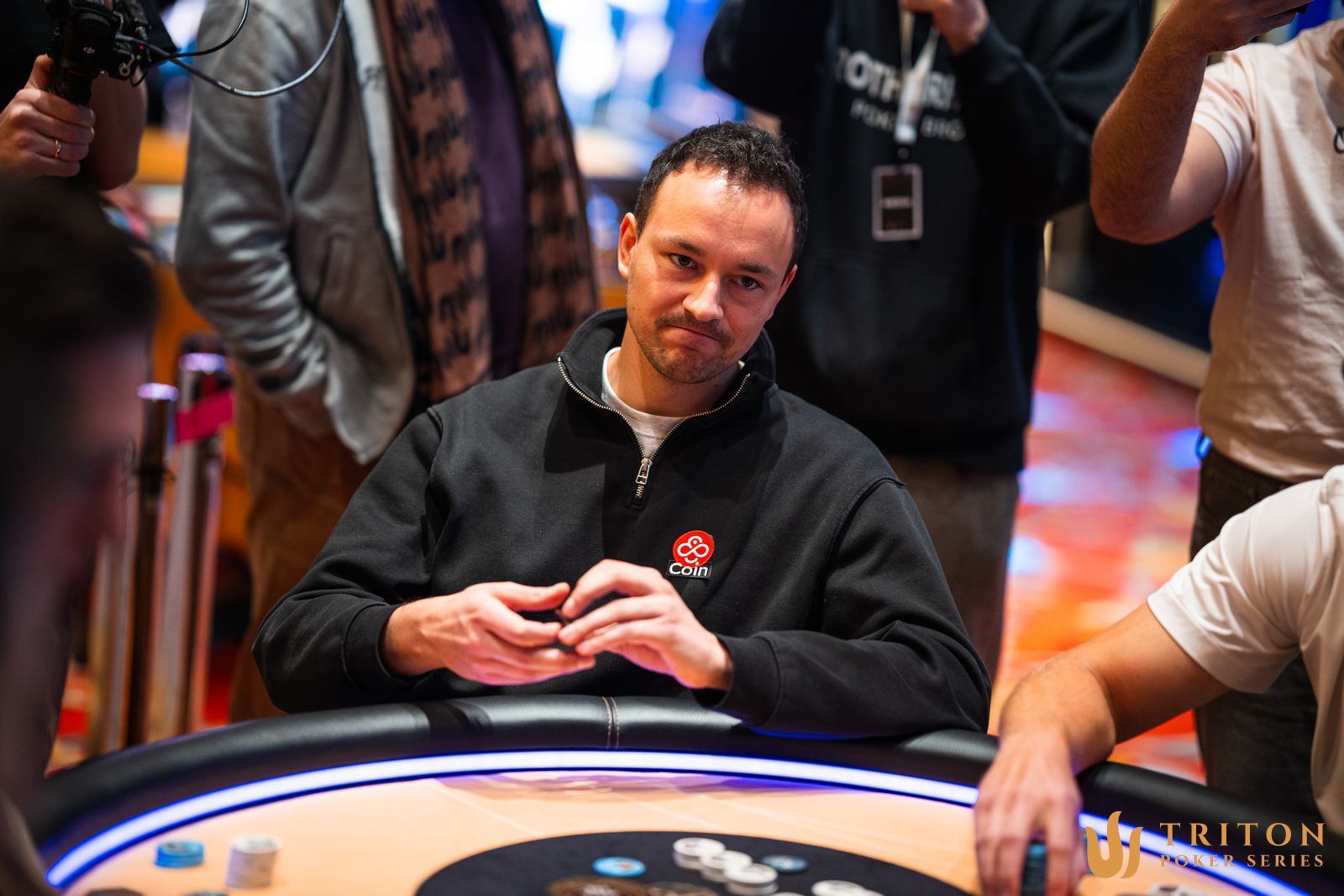
Mikolaitis had AK and opened the button. Jeschka, in the small blind, put in a three-bet, but Davies looked at pocket nines in the big blind and piled it in, covering both opponents. Mikolaitis called for his 27 blind stack, and Jeschka let his hand go.
Davies was running hot and the QQ5 board kept the pocket pair ahead. Mikolaitis won $165,000 and added $220,000 from his four bounties. (Jeschka, meanwhile, threw his hands in the air in disgust. He'd folded .
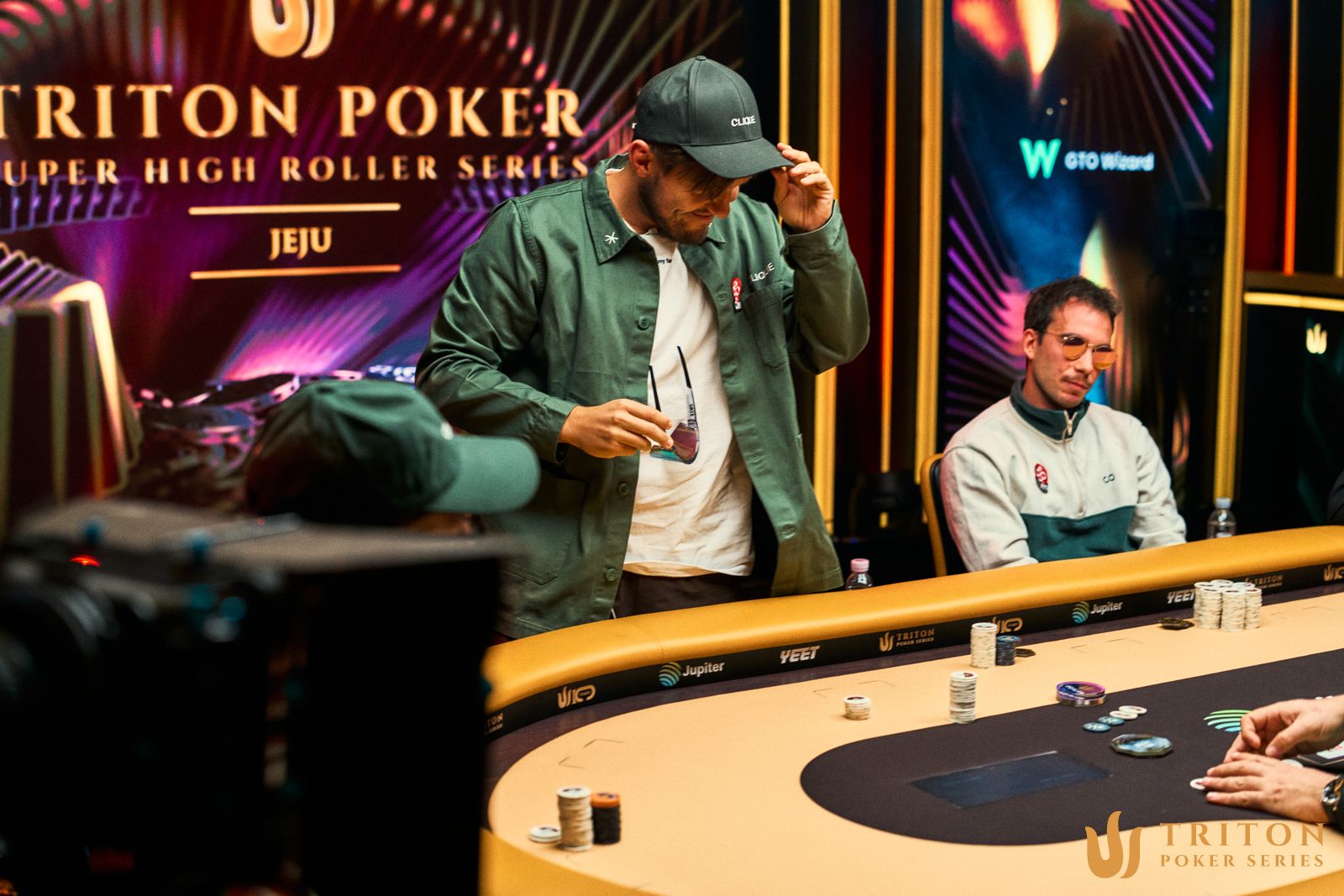
Dominykas Mikolaitis took sixth
Having laddered two spots, Mateos had added a decent chunk to his eventual payout, but his stack hadn't changed significantly. He had only eight blinds and found pocket sixes on the button, which sent his chips into the middle.
Yahor Dambrouski, in the big blind, looked down at AQ and called from a 30-blind stack. This was another flip, but the queen on the flop gave it to the over-cards. Two-time champion Mateos was out in fifth for $214,000, and he was another big bounty winner. He found $480,000 inside his three bounty envelopes.
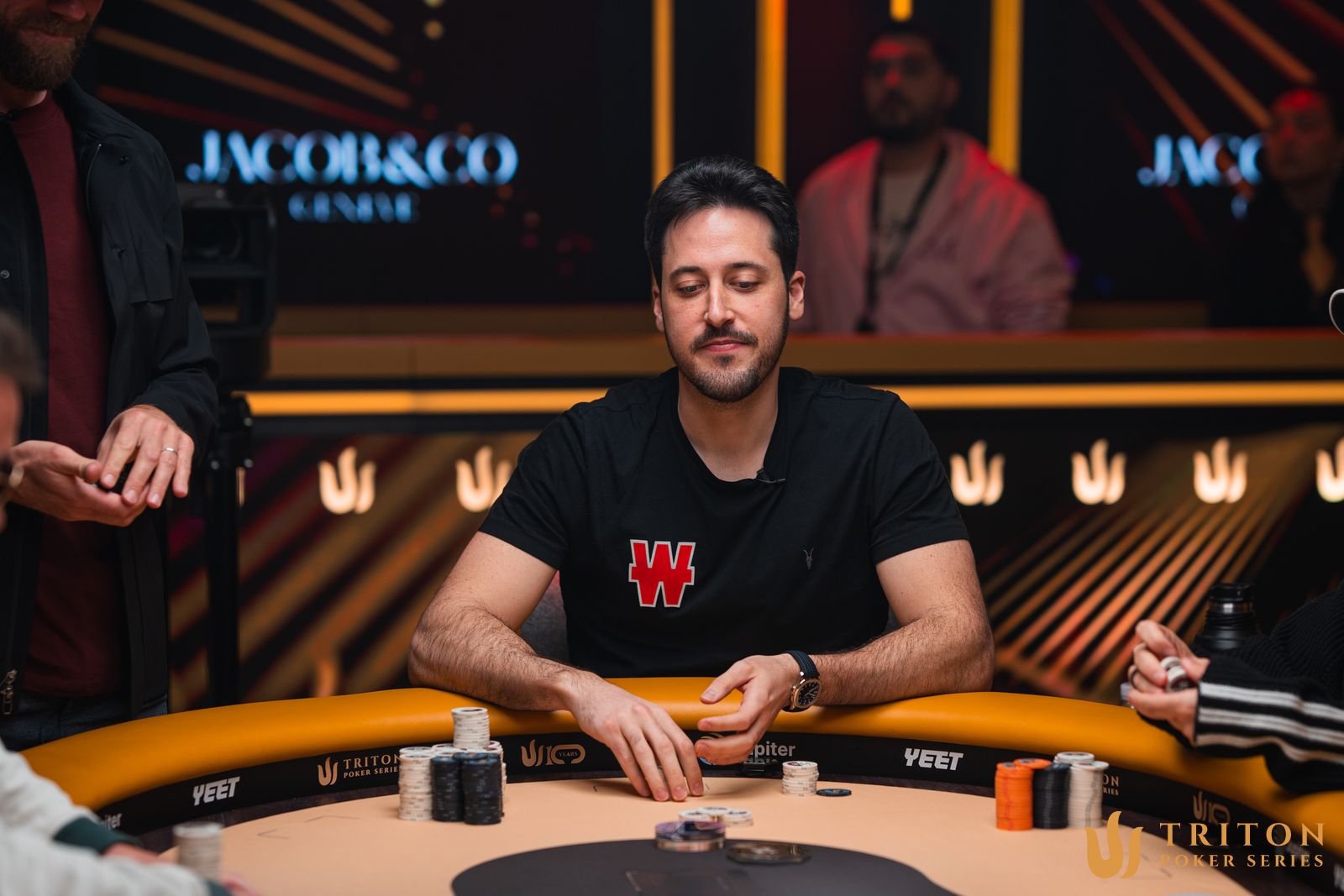
Even Adrian Mateos couldn't halt the charge
In contrast to this stage in many other tournaments this week, stacks were still very deep. Piekazewicz was managing to pull away from Davies at the top, but Davies and third-placed Dambrouski still had about 100 blinds between them. It was only really Jeschka who had a slightly smaller holding.
This state of affairs meant a slight slowing in the rate of attrition, but eventually every impasse has to give. Jeschka won a number of small pots, while Dambrouski lost half his stack in a collision with Piekazewicz, folding on the river looking at a board of 793.
That left Dambrouski with nine blinds, which he got in the middle with, coincidentally, pocket nines. However, Piekazewicz raise/called with KJ and flopped a king.
Dambrouski's first Super High Roller Series cash weighed in at $269,000 and he added $180,000 in bounties.
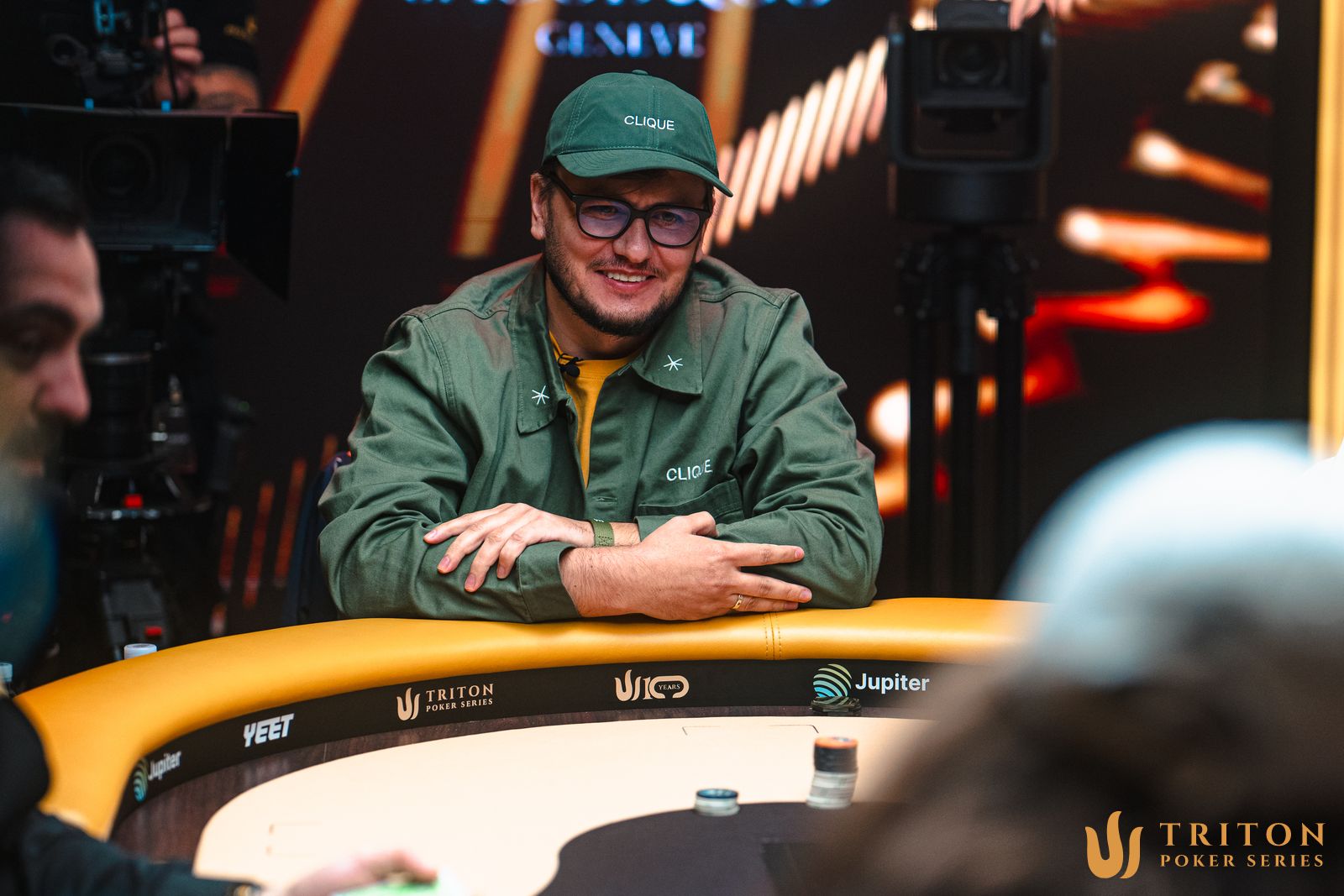
Yahor Dambrouski became the latest victim
Jeschka had done exceptionally well to turn the 15 blinds he had at the start of the final into a stack that was still playing three handed. But he had only 11 blinds when his final hand came about.
Piekazewicz, still with more than 120 blinds, was opening every pot pretty much. And he open-jammed the small blind holding 87, which was only to be expected in the circumstances. Jeschka found Q in the big blind and made the call for his tournament life. But after the board ran , Piekazewicz had paired his seven and Jeschka was out.
He earned $329,000 for third and won $80,000 in bounties.
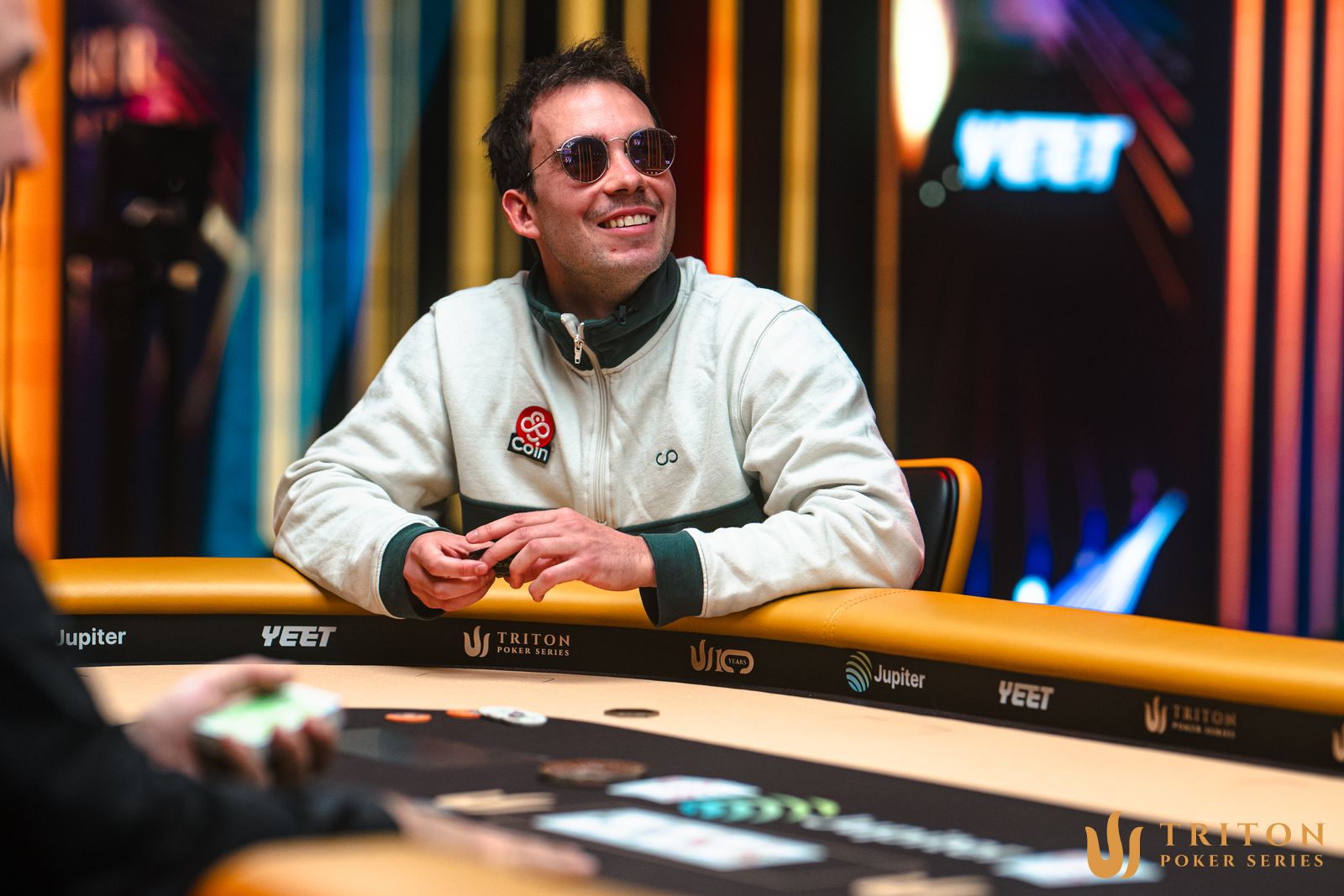
Hannes Jeschka made the most of the short stack he had at the final table start
So the predictable heads-up battle duly ensued, with Piekazewicz an overwhelming leader. He had won a big pot from Davies during four-handed play with a straight flush, holding 710, and Davies hadn't really managed to recover. When heads-up began, Piekazewicz had 26,150,000 chips, or 105 big blinds, while Davies had 5,850,000, or 23 BBs.
To have any chance of a comeback, Davies needed to double quite quickly. And finding AK on one of the first deals would give him a pretty good chance. Piekazewicz open-jammed from the small blind, giving Davies the easy option to play for all of it.
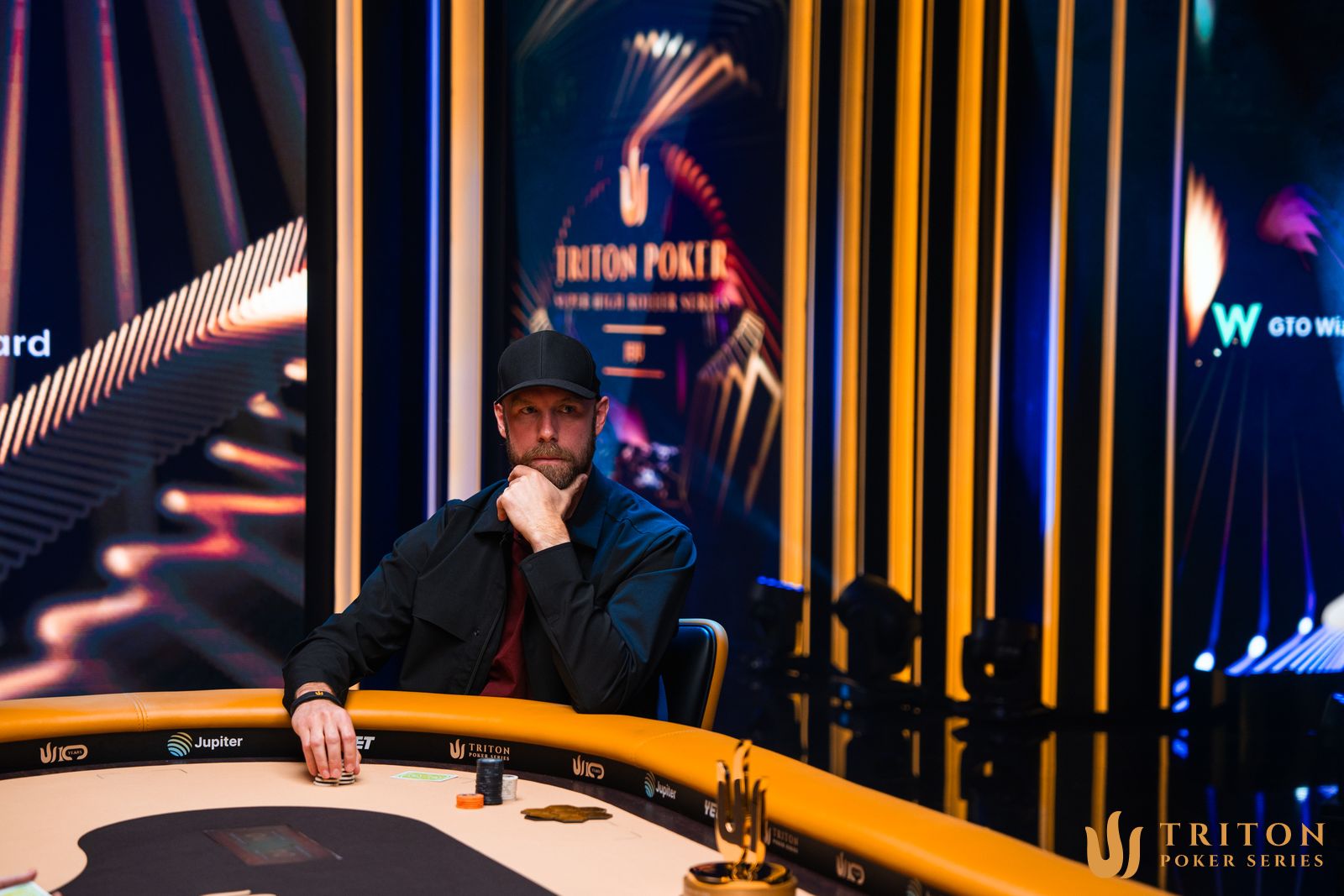
Seth Davies defeated heads-up
Piekazewicz tabled pocket deuces, so this was essentially a flip. But with a day like Piekazewicz had been having, there was nothing Davies could do to catch up. The board of 6Q9 was completely dry.
Piekazewicz finished with 14 bounties, including Davies' and his own. That was a minimum of $560,000 from the bounty draw, which he gleefully turned into even more. That was in addition to the $709,000 he confirmed from the prize pool.
Davies won $478,000 plus $380,000.
But this was only one man's day.